The wall that wasn't where I thought it was
Everyone agreed the research mattered. Agreement was never what was missing.
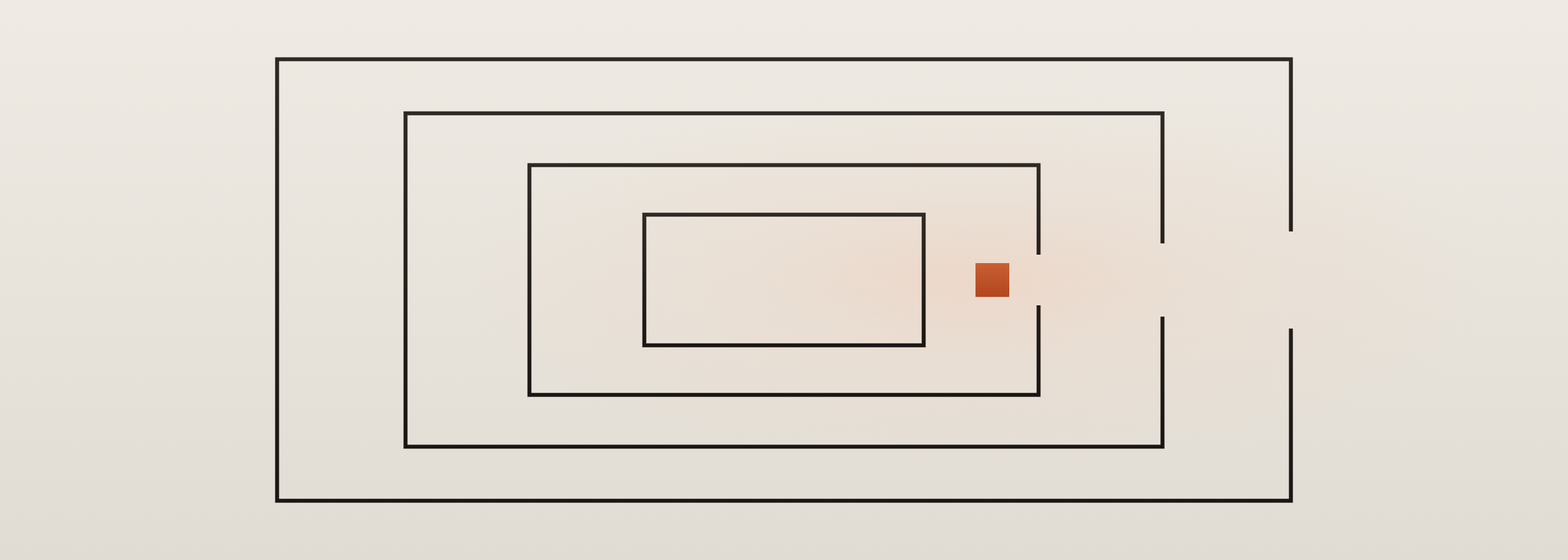
The openings line up. The thing stopping you is not at the outer wall.
Some organisations have a team they say they want and can't seem to make stick.
It gets announced. It gets a budget, a hire, sometimes a whole department. Leadership genuinely means it. But then, twelve months later, it's still in the same place as it was when it started, only the team's morale is low and there is no clear direction for improvement or rolling it back. Research. Strategy. Data. Whatever the name, the pattern is the same.
I spent years building one of these teams, and I learned the pattern the hard way, by walking straight into every wall it had.
Where the wall actually was
Early in my career I set out to build a proper research practice inside a product organisation. The need was obvious. We were making design decisions and shipping them with almost no evidence that they worked. Everyone agreed research mattered. So I started, and immediately hit the first wall.
We wanted to talk to customers. The most reasonable thing in the world. And we were told, politely and repeatedly, that the customers weren't interested. The people who managed those relationships passed the message back: clients don't have time, clients don't want to be bothered, it isn't worth pushing.
For a while I believed it. The stated reason was "clients aren't interested." But when we finally got in front of clients, they were delighted to be asked. They had plenty to say. The blocker turned out to be the layer in between, the people whose own relationship with the client felt threatened by us showing up in it, who had every incentive to keep us away and an easy, unfalsifiable reason to use: "they're not interested." Nobody was lying. They sincerely believed the thing that conveniently protected their position.
That's the say-do gap with a motive. The organisation said "research is a priority." The organisation's actual behaviour, the incentives running through the relationship layer, said "not if it disturbs anything." And the stated reason for the friction pointed at the customer, which was the one place the real problem wasn't.
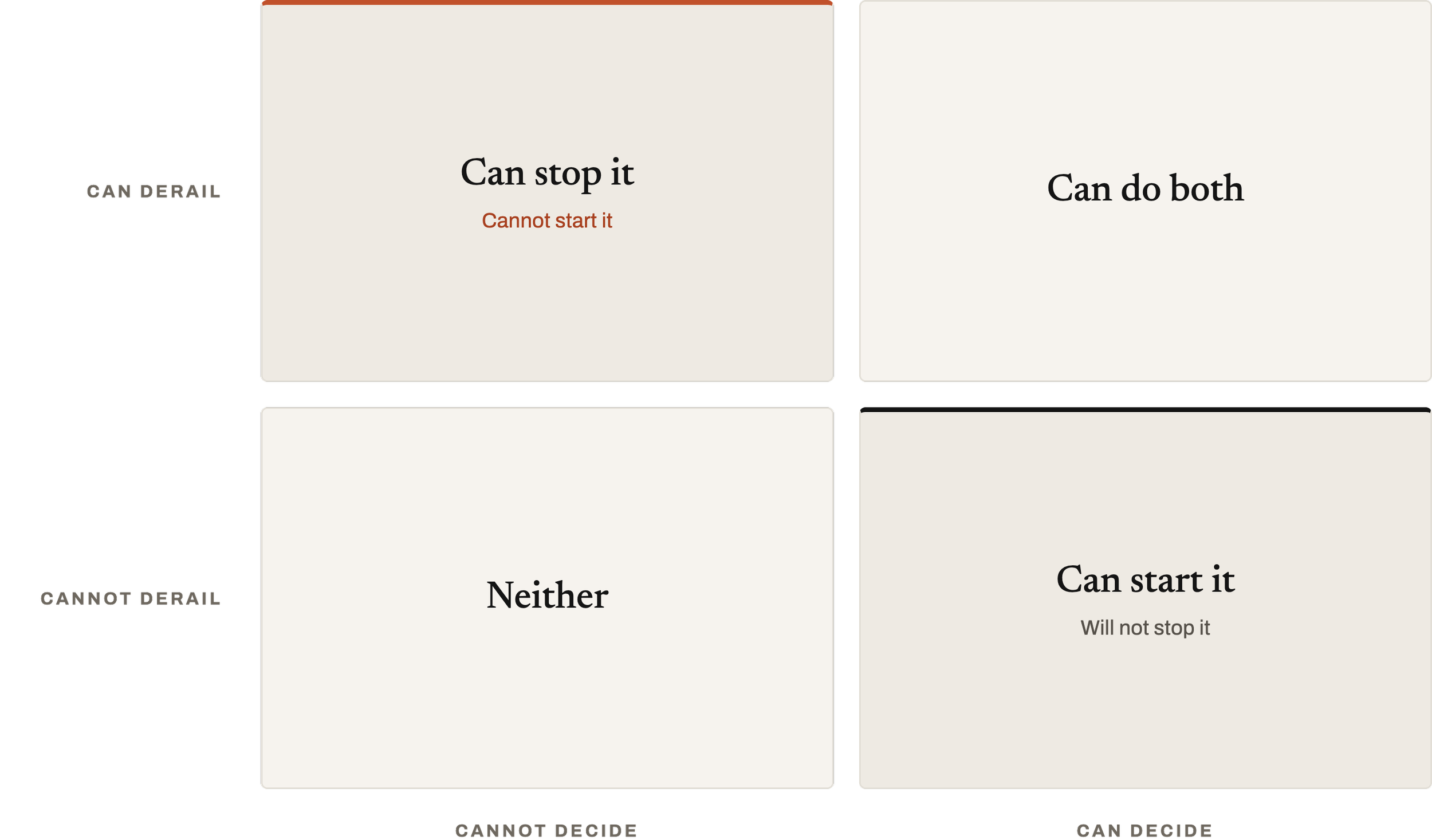
Who decides and who deraila are different lists.
Why the work gets rejected
I saw it in organisations I worked with across different industries, and it had the same shape each time. A team like research, or innovation, or genuine strategy, exists to change how decisions get made. That's the whole point of it. But the existing organisation is a settled arrangement of who decides what, whose judgement counts, and whose relationships are protected. So the new team arrives carrying an implicit threat: it will move authority around. It will let evidence overrule seniority. It will put someone new in a room that used to belong to someone else.
The organisation says yes to the team because the idea of it sounds unarguably good. The organisation then rejects the work in practice because saying a true yes would mean handing over something nobody volunteered to give up. The gap between those two isn't hypocrisy. It's the difference between what an organisation can endorse and what it's actually built to allow.
And the rejection doesn't announce itself; it arrives as reasonable friction. Not enough time. Not the right moment. Clients aren't interested. The roadmap is full. Every individual no is defensible. The pattern only becomes visible when you stop accepting each reason at face value and start asking what each one is protecting.
How the work actually takes hold
Here's what eventually worked, and it wasn't persuasion. I'd made the case for research a hundred times; the case was never the problem.
What changed things was getting the authority question handled before the work. When I stopped trying to win the relationship layer over and instead secured backing from a level senior enough to make the shift in authority legitimate, the friction didn't vanish but it lost its cover. "Clients aren't interested" doesn't hold up in front of an executive who's already agreed the clients will be asked. The work took hold because the structure underneath it was finally made to permit what it had only ever claimed to want.
What I'd do differently is start earlier, and start with the organisation rather than with the work. Before making any case at all, I'd spend the first weeks reading the place: how it's actually structured, and where decisions get made rather than where the org chart says they get made. Most large organisations run some version of a matrix, which means two reporting lines and no single obvious owner of anything. That ambiguity is usually where the friction lives.
Then I'd map the people, though not by seniority. By two separate questions: who can decide, and who can derail. Those produce different lists, and the second one is the one nobody writes down. The layer that blocked me had almost no formal authority and complete capacity to stop the work. I'd spent a year trying to persuade people I had never properly identified.
Which is the thing I'd want to say to anyone standing where I was. Have the conversations across the business, all of them, early. But not as persuasion. You're not there to convert anyone, and you probably can't. You're there to find out two things: whose position your work disturbs, and who stands to gain from it working. Diagnosis, not a charm offensive. The first tells you where the friction will come from. The second tells you who will make it a success, and that is usually the person you should have gone to first.
You can't force yourself on people. That part is true, and it's why the soft skills matter. But you also can't build enough goodwill to dissolve a structural problem, and I think a lot of people in these roles spend years trying. The skill isn't warmth. It's being able to sit in someone's office and work out, without them ever telling you, what your success would cost them.
So if you have a team that won't stick, more buy-in is probably not what's missing. Everyone already agrees; agreement was never the problem. If the team actually worked, what would it change about who decides things? And who needs it not to?